

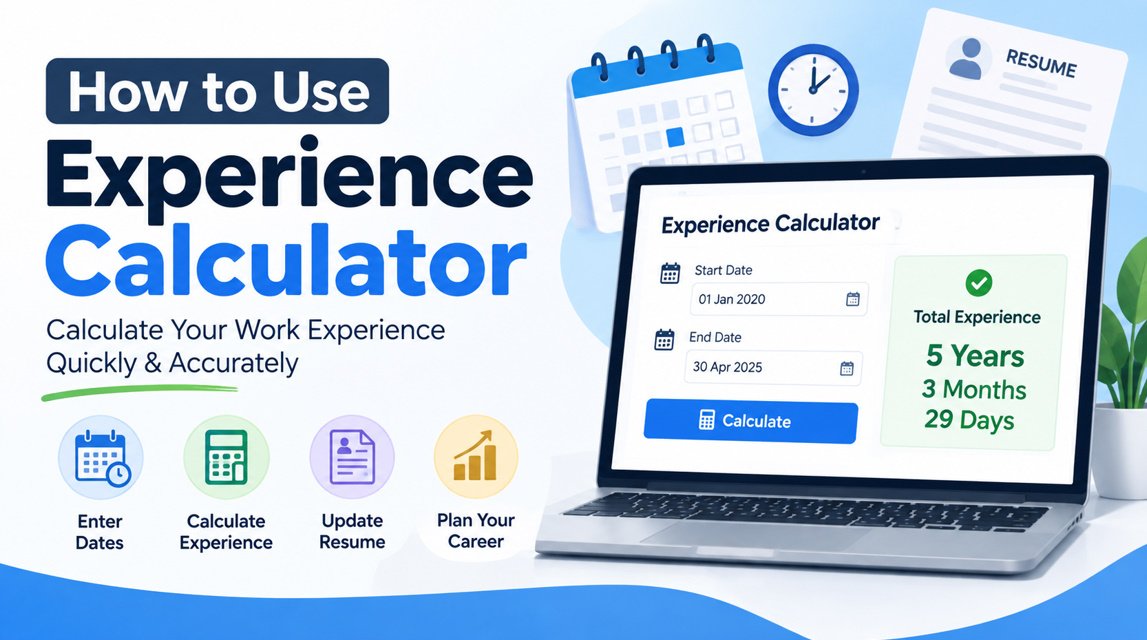
What Is the use of Experience Calculator?
The use of Experience Calculator is an online tool designed to determine the total amount of professional or employment experience between two or more dates. Instead of manually counting years, months, and days, users can enter their employment start and end dates to get a quick and accurate result. It is useful for employees, job seekers, students, recruiters, and professionals.
The use of experience calculator simplifies date calculations by accounting for different month lengths and leap years. Depending on the tool, you may also calculate experience from multiple jobs or employment periods. This makes an experience calculator helpful when preparing a resume, checking job eligibility, completing applications, or organizing a professional career history.
- Calculates total work experience
- Uses employment start dates
- Calculates employment end dates
- Shows years and months
- Handles different month lengths
- Reduces manual calculation errors
- Supports career planning
- Saves time and effort
Why Should You Use an Experience Calculator?
Use of experience calculator is to Calculating professional experience manually can become confusing when your career includes several jobs, internships, freelance projects, or employment gaps. An experience calculator online provides a convenient way to determine the duration of each position and understand your overall work history. It can be especially useful when an application requires a specific experience threshold.
Another important advantage is consistency. Manual calculations may produce mistakes when dates span different months or years. A reliable experience calculator processes the dates automatically, helping you obtain a clearer estimate of your professional experience. You can use the result when updating your CV, LinkedIn profile, job application, or career records.
- Simplifies date calculations
- Helps verify experience requirements
- Useful for CV preparation
- Supports job applications
- Reduces calculation mistakes
- Handles complex date ranges
- Helps organize employment history
- Provides quick results
How to Use Experience Calculator Step by Step
Using an Experience Calculator is generally straightforward. First, locate a trustworthy online calculator and identify the fields provided for employment dates. Enter the date you started working and the date you finished. Some calculators allow you to enter today’s date when your current employment is still active.
After entering the information, review the calculated duration displayed by the tool. If you have worked for multiple employers, add each employment period separately when the calculator supports multiple date ranges. Check your original employment records if the result seems unusual, especially when the dates involve overlapping positions or incomplete information.
- Open the calculator
- Enter your start date
- Enter your end date
- Use today’s date if applicable
- Add additional jobs if supported
- Click the calculate button
- Review the experience result
- Verify the dates entered
How Does an Experience Calculator Work?
An experience calculator uses date difference calculation to determine the period between a beginning date and an ending date. Rather than simply subtracting the numbers representing years and months, the tool considers the calendar structure. This helps account for months containing different numbers of days and for leap years.
For multiple employment periods, some advanced calculators calculate each interval independently and then combine the results. This approach can provide a useful estimate of total professional experience. However, overlapping employment periods should be reviewed carefully because adding overlapping dates together may incorrectly increase the total experience.
- Compares two dates
- Measures calendar duration
- Accounts for leap years
- Handles different month lengths
- Calculates years and months
- May calculate days
- Can support multiple jobs
- Combines eligible work periods
How to Calculate Work Experience Manually
Although an online calculator is faster, understanding the basic manual method can help you verify the result. Start by identifying the exact employment start and end dates. Then compare the years, months, and days. If the ending day is earlier than the starting day, you may need to borrow days from the previous month.
For example, if an employee worked from January 15, 2020, to January 15, 2024, the period is exactly four years. More complicated dates require careful calendar calculations. This is why a work experience calculator can be useful when employment periods contain different months, leap years, or multiple positions.
- Record the starting date
- Record the ending date
- Compare the years
- Calculate remaining months
- Calculate remaining days
- Check calendar differences
- Review leap-year effects
- Compare with an online result
How to Calculate Experience From Multiple Jobs
Many professionals have experience with several organizations. For example, someone may have worked for one company for two years, another organization for three years, and completed a one-year internship. An experience calculator can help organize these employment periods and determine the duration associated with each role.
When calculating total experience, avoid automatically adding overlapping periods. If two jobs occurred at the same time, simply adding both durations could exaggerate your total chronological experience. For official applications, always follow the employer’s definition of experience because some organizations count relevant experience differently.
- List every employment period
- Record each start date
- Record each end date
- Calculate each duration
- Identify overlapping dates
- Separate internships when needed
- Combine non-overlapping periods
- Follow application requirements
Benefits of Experience Calculator for Career Planning
One of the biggest benefits of Experience Calculator is improved career record management. Professionals can quickly determine how long they have worked in different positions and identify their total experience. This can make it easier to maintain an accurate CV and prepare information for applications requiring minimum years of professional experience.
The tool can also support career planning. By reviewing employment durations, users can organize their professional timeline and identify valuable experience gained across different roles. Recruiters and HR professionals may also use date calculations when reviewing candidate histories, although official employment records should remain the primary source for verification.
- Saves valuable time
- Improves record organization
- Supports CV updates
- Helps prepare applications
- Simplifies career timelines
- Assists HR calculations
- Makes experience easier to understand
- Supports professional planning
Common Mistakes When Using an Experience Calculator
Even a simple calculator can produce an unexpected answer when incorrect information is entered. One common mistake is confusing the employment start date with the offer date or joining date. Another is entering an incorrect end date for a previous job. Small date errors can change the calculated experience.
Users should also understand what the result represents. Total experience may not always mean the same thing as relevant experience, full-time experience, or experience accepted by a particular employer. Before submitting an application, check whether the organization has specific rules about internships, part-time employment, overlapping roles, or career breaks.
- Check every date carefully
- Use the actual joining date
- Confirm employment end dates
- Avoid duplicate job periods
- Check overlapping employment
- Understand relevant experience
- Review the final result
- Follow employer requirements